Escape Games
Read the way out before the pressure catches up
Escape games give you something to get away from and a reason to move forward. A chase can give you almost no time to look at a route. A gate can ask you to work out a short sequence before you are allowed to continue. A high platform can put the decision between you and the exit one jump at a time. Choose a title by the kind of pressure you enjoy. Its opening moments can tell you whether it rewards looking farther ahead, keeping a rhythm, or stopping long enough to recognize a rule.
Find the part of the scene that tells you where to go
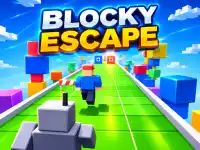
Blocky Escape puts a security robot behind you on a floating track. Keep your attention on the route and look for changes in the lane as the track comes into view. When an obstacle surprises you, look for something you could have seen a moment earlier. A feature beside the track or a clear stretch before a gap can help you recognize the situation on another run. Once you know what to look for, you may have time to move earlier without making a sudden correction.
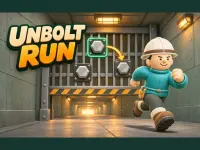
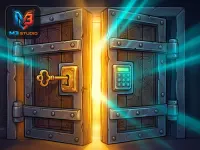
In Unbolt Run, steel gates stand between stretches of running. The arrows help you work out the order for removing bolts. Read the arrows when you reach a new gate and let them guide your attention through the options. If a puzzle slows your escape, try remembering where the first useful arrow appeared. The next time a gate comes up, look at that kind of cue before trying to solve the sequence from the shape of the gate alone.
Plan the landing that gives you another choice
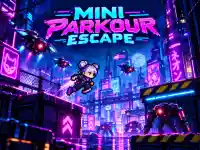
Mini Parkour Escape makes progress by climbing through a pixel-art platforming course. Notice which landings give you enough surface to decide on another move. A jump you can just barely reach may leave you with very little time to adjust. When a nearby platform is easier to use, see whether it lets you approach the next jump from a better place. Look at each landing as part of the route upward, even if you are still several moves from the exit.
When a run goes wrong, remember the first moment you were forced to change your plan. You may have started a turn late, looked at the wrong part of a gate, or chosen a jump before seeing where it would end. Repeat that section and change the choice that came immediately before it. This makes it easier to tell whether you have solved the original problem or simply avoided it on one lucky attempt.
Take a short escape round when you want a goal that comes into view as you play. A chase gives you a reason to keep looking ahead. A gate puzzle gives you something specific to check. A climb can be satisfying when you recognize the route between platforms. Try the format that makes you curious about how you would improve your next attempt when you reach the same obstacle again.