Football Games
See football from the table, the touchline or the flippers
The Football tag gives you more ways to follow the ball than a conventional match does. You can move a miniature player with a flick, take charge of a game as the referee, or stand at the bottom of a pinball table shaped like a pitch. What changes is the decision you make. In one game you choose a line for the next pass. In another you decide when you have seen enough of a play to make a call. Pick the perspective you are curious about and spend the opening seeing which part of the pitch matters most from there.
Leave your miniature players somewhere useful
Toy Soccer Cup builds a match around flicking little players to pass and shoot. Before you flick, trace the route from your player to the ball and then think about where both could finish. A good-looking touch may leave your player far from the next move. Try using the first few turns to get a feel for the distance a flick covers. When a direct shot is available, think about whether an easier pass would give you a clearer direction afterward. The tabletop view lets you look at the whole arrangement while you decide. Compare two similar moves and notice how a small adjustment changes where the pieces end up.
Watch a play develop before reaching for the whistle
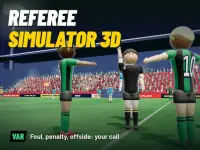
In Referee Simulator 3D, you run with play and make decisions about what happens on the pitch. Look at how the game shows the players involved before a decision appears. If you only watch the ball, another player's movement can be easy to miss. Find a view that lets you see the moment of contact and the space around it. When the game asks whether something was a foul or a clean tackle, use what you just saw rather than guessing from the positions after the play. The match takes on a different rhythm when your goal is to observe a sequence instead of contributing to it.
Read the return before tapping a flipper
Football Pinball presents a football-shaped table from your own end and gives you two flippers. Let the first ball tell you how quickly it travels toward the bottom. If it returns along one side, watch the point where it reaches the flipper and see where your tap sends it. The same input can send the ball along a different route depending on when you act. Try a few returns while paying attention to the spot where the flipper meets the ball. That gives you something clearer to compare than the score alone, especially when the ball returns quickly.
Choose the kind of replay you want. A tabletop match lets you look back at one touch, a referee round asks you to notice what happens away from the ball, and pinball lets you test timing over several returns. Bring one detail into the next round and see whether it makes the action easier to read.