2D Games
Read the screen as a map in these 2D games
A two-dimensional view gives you a good look at the relationship between objects on screen. You can see a moving blade cross a path, measure the gap between cloud platforms, or follow a scene drawn as a cross section of a place. The view is useful even when you cannot see the whole level. Use the visible landmarks to tell where the next challenge begins and where you will have time to stop. If the screen moves with your character, look at what comes into view before deciding how fast you want to go.
Watch a trap complete its cycle
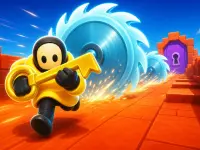
Hero vs Traps uses moving saws and other mechanisms in a series of levels. When you meet a new trap, find a place where you can watch it without being in its path. Estimate the opening by looking at how long the safe part lasts instead of focusing on where the blade is right now. If a locked section stands farther along, check whether you can see something that tells you how to open it. A short pause can help you separate the problem of passing the blade from the problem of progressing through the room.
Look down before leaving a cloud
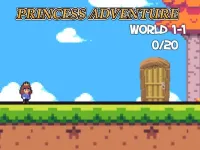
Princess Adventure is a vertical platformer in which Princess Sera descends through slippery cloud platforms. Look at how much of the lower part of the scene you can see from your current position. Pick a cloud you can recognize, then watch where the princess moves when she reaches it. A landing near the middle may give you more time to decide where to go than a landing close to an edge. After you have crossed a few clouds, note what gives you useful warning about the next gap. That can help when the descent starts bringing new platforms into view more quickly.
Use changes in the scenery to follow a story
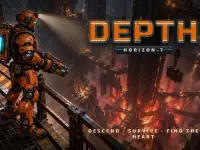
In Depth, the story begins at the Horizon-7 mining station, where machines have started speaking with one voice. Treat a new screen as a chance to notice what the game has shown you about the place. A machine or sign can stand out before you know whether you will interact with it. If you have to retrace a stretch, remember what was different around the point you are looking for. That gives you a way to orient yourself without relying on the map in your head being perfect. Let the opening establish what it wants you to pay attention to before you hurry into the next area.
Try comparing games with different kinds of motion in this collection. A horizontal obstacle course encourages you to watch the far side of the screen. A descent puts more of your attention below the character. A story can give you reasons to slow down and notice details that would be easy to miss in a race. On your next round, watch the part of the scene that matters at the moment you have to move. The same flat view can ask you to read it in several different ways.