Arcade Games
Make a quick arcade round worth replaying
Arcade games are easy to drop into when you have time for a few tries. The opening usually gives you a clear action to repeat: take a bend, collect an object small enough to fit, or line up a shot with a cluster of the same color. The appeal comes from what happens when that familiar action becomes slightly harder. You have less room to steer, the objects you can collect change, or a new gap opens on the board. Pick a game with a result you can see quickly, then decide which part of that result you want to improve.
Use the scenery to remember a turn
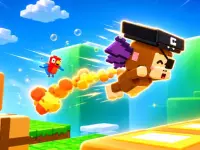
Hover Rush sends anti-gravity racers along floating courses around a tropical archipelago. While you learn a track, pick a landmark near a bend and use it to remember when the road changes direction. A waterfall or a stretch above the lagoon might catch your eye before the next turn is obvious. Try to look past the landmark as you approach rather than following it with your eyes all the way. That leaves more time to see what is on the other side. On your next lap, judge whether you can take the same turn with fewer corrections.
Keep the early route short while you grow
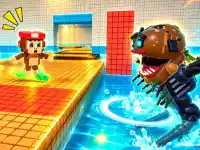
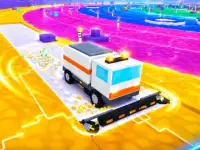
In Pothole Party, you steer a hole around a toy town, swallowing objects smaller than it before the clock runs out. The big landmarks are easy to see, but they are a job for later. Look for several things you can collect without crossing a large empty area. As the hole grows, check which nearby objects have become practical targets. A compact opening route can put you close to the next group when you are finally big enough to collect it. Compare two starts by seeing how quickly they let you change targets. A better route should make the next size of object easier to find as well as getting you there sooner.
Look above a color match before you shoot
Candy Bubble 2 asks you to shoot candies into groups of three or more of the same color. When you have a choice of matches, look at what each group connects to the rest of the board. A match near a crowded edge can be useful if it leaves space for a later shot. A group farther up may let other pieces fall. Before aiming at the first obvious pair, check both sides of the board and choose the change you want to make. After the shot, take a second to see how the shape of the board has changed.
For a short session, leave yourself a reason to make another attempt. Remember the bend that became easier once you knew where to look, the street that let you grow fast, or the shot that freed a group of candies. The next round gives you a chance to repeat that result or find out which small change would improve it.