Ball Games
Read the landing, the rebound and the next shot
Ball games give you a path to predict before anything moves. In a platform game, the path ends at the surface you hope to reach. In a bounce puzzle, the first wall is only the beginning. In pool, the object ball may head for a pocket while the cue ball keeps rolling somewhere else. Choose the kind of movement you would like to practice. Start with a shot or jump whose result you can follow all the way. The point where it finishes can tell you what to change on another attempt.
Settle into a rhythm between islands
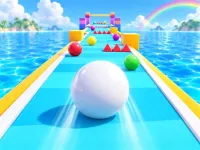
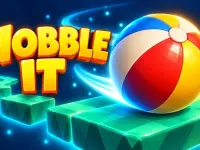
Glow Hop sends a glowing ball across floating platforms. Landing precise jumps builds combos, which gives you a reason to aim for a sequence of good landings. Look at the available surface before you jump. If you come down near one edge, see whether you can use the space around you to prepare for the following platform. A familiar rhythm can help, but pay attention when the gap changes. Try one run in which your goal is to notice which jumps give you time to read the next one. Once you can pick those out, you have a better idea of where the rhythm can stay steady.
Choose where the volley meets the wall
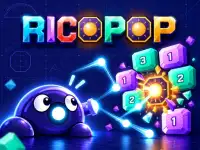
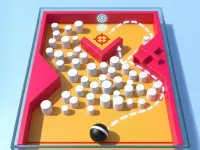
In RICOPOP, balls bounce around a neon layout where you want to break crystals in as few shots as possible. Trace the first rebound before releasing a volley. A small change near the starting point can send the balls to very different parts of the board. Look for a route that reaches a group you cannot hit directly. After the volley, check what was left behind. The same angle may be less useful once the first group is gone, so give yourself a moment to see whether the next shot needs a different wall. This is a good game for practicing how to estimate an angle and then immediately see the result.
Remember that the cue ball has somewhere to go too
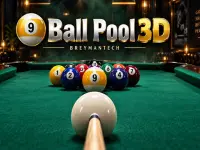
9 Ball Pool 3D offers computer opponents, a championship and a timed challenge. On an opening shot, look at the line between the target ball and the pocket, then consider how the cue ball will approach it. Watch where the cue ball stops even if the target goes in. The position it leaves can affect whether you can see another clear line on your next turn. If you are learning where to aim, choose a less crowded shot first. That makes it easier to notice where contact happened and what the two balls did afterward.
Switch games when you want to look at movement in a new way. A successful hop can set up another jump, a rebound can reach a crystal behind another one, and a pool shot can leave the cue ball clear of an obstruction. On the next round, pay attention to the place where the first move leaves you and see what that position makes possible.