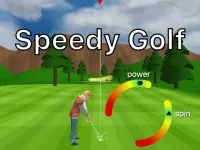
Firstly, consider your preferred level of challenge. Some games focus on quick, satisfying one-shot putts, while others involve managing the entire round, including shot selection and strategy. For a more straightforward experience, look for games that emphasize precision in aiming and distance control. These often provide immediate feedback and clear goals. Alternatively, if you enjoy more complex gameplay, seek out titles that include elements like wind effects, hazards, and different club types.
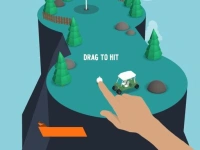
Secondly, think about the visual style and atmosphere of the game. Some golf games offer realistic 3D graphics with detailed course environments, while others use cartoonish or minimalist designs for a lighter feel. If realism is important to you, choose games that provide accurate physics and authentic course layouts. For a more relaxed experience, consider games that prioritize fun over accuracy.
Finally, try experimenting with different clubs in any game that offers this option. Each club has its own unique characteristics, such as distance and trajectory. Pay attention to how the ball behaves when hit with various clubs; this can help you understand which tool to use for specific shots. By paying close attention during your next attempt, you'll be better prepared to make strategic decisions in future rounds.
To enhance your gameplay experience, focus on understanding the impact of wind direction and speed. When playing a game that includes wind effects, note whether it blows from left to right or vice versa, as this can significantly alter your ball's path. For instance, if you hit the ball into a strong headwind, it will travel shorter than expected; conversely, a tailwind can carry your shot further than planned. Adjusting your aim and club selection accordingly can help you navigate these challenges more effectively.
Additionally, pay attention to the lie of the land around each hole. Some games feature elevated tees or greens with obstacles like bunkers, water hazards, and steep slopes. Knowing how to approach these elements can save strokes. For example, if a green is sloped towards a bunker, consider hitting an approach shot that curves away from it rather than straight at it. Similarly, using a lower trajectory shot when facing a steep slope can help you avoid overshooting the green.