Logic Games
Use the rule to narrow down your next move
A puzzle gets easier to think about when you can point to the condition that makes a move possible. A ring needs a gap in the right place. Matching tiles need a path between them. A bag in a merge game needs somewhere to land. Start by finding an example you can observe from beginning to end. Once that move makes sense, look at what it did to the rest of the puzzle. You will have a better reason to choose the following move than you did when looking at the whole screen at once.
Find the gap that can clear another ring
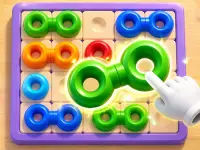
In Ring Unhook, the colored rings hook onto one another and each ring has a gap. Look for the part of a ring that passes through another one. As you drag to rotate it, watch where the gap goes in relation to that point. There may be several gaps visible, but the one that lets a particular ring separate is the one that matters for your next move. Try clearing a ring you can follow without losing sight of the others. Its removal may make a different connection easier to see.
Allow for pieces to fall after a match
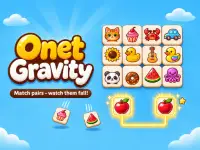
Onet Gravity combines matching tiles with a rule about how they can connect. Look at the open space beside the pair as well as the area between them. If the direct line is blocked, see whether a route through the empty space fits the game's limit on turns. After a match, check which tiles move. You can sometimes set up the next choice by clearing a pair that changes the arrangement of tiles you could not connect before. If you already see another match, decide whether it will still be there after the board shifts under gravity.
Pick a bag with a useful place to land
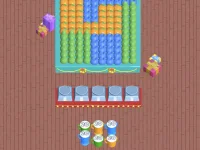
In Storky Number Drop, you choose a numbered bag of water and launch it with a rubber band. Think about which part of the pile would make sense for the bag before pulling back. If the pile is uneven, check where the bag could settle as well as where it will first arrive. Follow a few throws far enough to see what happens after contact. That can help you tell when a short shot is enough and when another angle gives you more room to reach the space you have in mind.
When a board seems to give you too many choices, describe a move you would definitely like to make. Then name one thing that prevents it. You may need to rotate a gap into view, clear a path or make space near the pile. Work on that condition and look at the puzzle again once it changes. Even if your original move is no longer the best option, you have learned which part of the arrangement affects it. That is a useful way to approach a later stage with unfamiliar pieces.