Math Games
Math games for crossing equations and remembering squares
Working out a number is one part of a math puzzle. The other part is deciding when that number is useful. You might remember the square of eight and still need to remember where the card with the answer was hiding. You might have a tile that completes an equation across the board and need to check whether it also works down the board. The Math tag on Pokio gives you several ways to use the same arithmetic skills. For a quiet round, pick a board where you can test a possibility before moving a tile. For a faster session, see how clearly you can think while a course moves past you.
Let the crossing equations narrow your choices
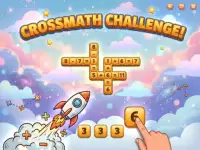
CrossMath Challenge asks you to drag number tiles into a crossword-style grid to complete equations across and down. Start with a line where most of the information is already filled in. If a blank belongs to two equations, work out what both lines need before committing a tile. A number that works across could leave the vertical line with no usable answer. When a line has two open spaces, you can also come back to it after completing a crossing. That often turns a guess involving two numbers into a calculation with just one unknown. It is worth checking the completed line aloud or in your head before moving on. Reading each symbol in sequence can catch a mistake that looked plausible when you focused on the numbers alone.
Remember what a card shows and where it sits
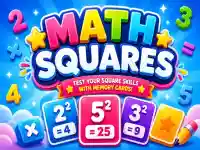
In Math Squares, a card showing a number pairs with a card showing that number multiplied by itself. If you turn over eight, you are looking for sixty-four. If you see sixty-four first, thinking of eight gives you a shorter label to remember when you look for the partner. Give each card a location as well as a value. You could remember the answer as being on the left edge, then fill in a more precise position as you see the cards nearby. When you miss a pair, try recalling both spots before turning anything else over. The attempt still gave you information, and a number you have already worked out can be easier to recognize the second time.
Keep the calculation short on a moving course
Mathematics Frenzy combines calculations with obstacle-course running. The pace makes it worth practising a way to read a problem quickly. Pick out the operation first so you know what to do with the numbers you see. If a calculation takes long enough to throw you off, try it again in your head between runs and see whether there is a simpler way to get the same result. For addition, grouping numbers around a familiar total can save you from counting one step at a time.
Choose CrossMath for intersecting clues, Math Squares for arithmetic mixed with memory, or Mathematics Frenzy for a run where your answer has to come while you are still moving.