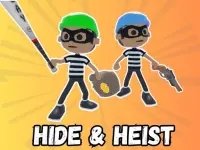
When you see "Thief" as a tag on browser games, it generally groups together stealth-based gameplay where players must navigate through environments undetected to complete objectives. These games often require careful planning and precise timing.
Last Updated:
Firstly, consider whether you prefer exploration or combat. In some thief games, the bulk of the challenge lies in uncovering hidden paths and secrets, with minimal direct confrontation. For example, you might need to find keys, avoid guards, or use environment hazards effectively. To improve, pay close attention to your surroundings for clues on how to proceed undetected.
Alternatively, if combat is more your style, look for games where stealth is a means to an end, allowing you to take down enemies without being seen. You might need to time your attacks and movements carefully or use distractions to avoid detection. Try to anticipate the enemy's next move by observing their behavior patterns; this can help you plan your actions accordingly.
Lastly, think about how much puzzle-solving is involved. Some thief games rely heavily on logic and deduction to progress through levels. You might need to figure out which items are useful or understand complex systems within the game world. Practice breaking down tasks into smaller steps and making notes of what works and what doesn't; this can help you solve puzzles more efficiently next time.
By considering these factors, you should be able to find a thief game that suits your preferred play style.
Stealth is crucial in many "Thief" games, so always move slowly and quietly when approaching enemies or sensitive areas. Use the environment to your advantage by finding shadows, corners, and other hiding spots to remain unseen. For instance, if you are sneaking past a group of guards, use a nearby pillar as cover to avoid detection.
Moreover, timing is everything in these games. Many "Thief" scenarios require precise moments to act without being noticed. Practice your timing by setting up simple scenarios where you can test different approaches and reactions. For example, if a guard walks slowly down a corridor, time your movements so that you pass him when he is looking the other way or when his back is turned. This will help you build confidence in navigating complex situations without being seen.